Portion Size Estimator: What Actually Works?
A portion size estimator is your practical solution for measuring food without tools. It uses visual cues and common objects for real-world accuracy. This method helps you manage calories and nutrients anywhere. We will show you what truly works for everyday meals and long-term health.
Table of Contents
- The Problem with Eyeballing Portions
- Why a Portion Estimator Beats Weighing Everything
- Your Hand: The Ultimate Portable Estimator
- Plate Method: The Simplest Visual Guide
- Common Object Comparisons for Quick Estimates
- Digital Tools vs. The Mental Method
- Evidence and Numbers
- Building Your Estimation Habit
- Pitfalls to Avoid with Portion Estimation
- Advanced Estimation for Specific Diets
- From Estimation to Intuitive Eating
- FAQ
The Problem with Eyeballing Portions
Our eyes are terrible at judging food volume. A “handful” of nuts can vary by hundreds of calories. Restaurant servings often triple standard portion sizes. This leads to consistent overeating without realizing it. We need a reliable system to correct our vision. Visual distortion is greatest with calorie-dense foods like oils and grains. Your brain is wired to underestimate these items. This creates a daily calorie surplus that leads to weight gain. Our environment promotes larger portions as the default. This problem requires a conscious counter-strategy. We built our approach to combat this exact issue.
Why a Portion Estimator Beats Weighing Everything
Kitchen scales are accurate but impractical for daily life. You won’t carry a scale to a restaurant or friend’s house. Visual estimators use tools you always have with you. Your hands, a plate, or a cup become your guide. We believe this method promotes lasting habit change. Scales can create an obsessive, numbers-focused relationship with food. Visual estimation fosters mindfulness and awareness instead. It’s a skill that improves with practice anywhere. You gain freedom from strict measuring tools. This flexibility is key for sustainable nutrition. Our method integrates seamlessly into your existing routine.
Your Hand: The Ultimate Portable Estimator
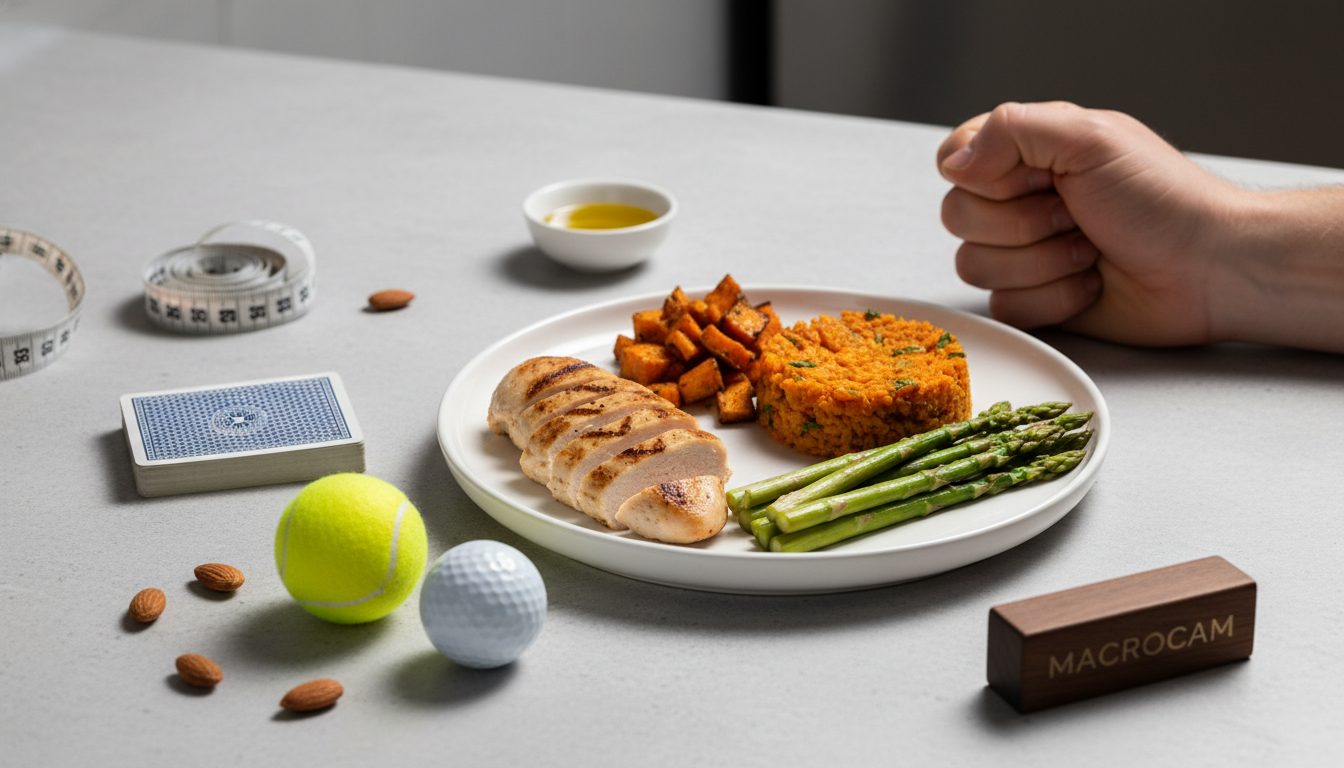
Your hand provides personalized, always-available measurements. It scales naturally with your body size. A larger person typically has a larger hand. This automatically adjusts portions for your needs. Use these simple guides for consistent results.
- Palm: Equals one serving of protein (chicken, fish, tofu). This is about 3-4 ounces or 20-30 grams of protein. Measure thickness too; it should match your palm’s depth.
- Fist: Equals one cup or a serving of vegetables, grains, or fruit. Use this for cooked spinach, berries, or oatmeal. Your closed fist is a perfect volume guide.
- Cupped Hand: Equals about half a cup or a serving of carbs like rice or pasta. This is ideal for dense grains and legumes. Two cupped hands equal roughly one cup.
- Thumb: Equals one tablespoon or a serving of fats like nut butter or cheese. Measure from the knuckle to the tip. Use this for oils, butter, and hard cheeses.
- Thumb Tip: Equals one teaspoon. This is perfect for measuring cooking oils or sugar.
Practice these measures with your own meals this week. We recommend starting with your protein portion at dinner.
Plate Method: The Simplest Visual Guide
Divide your standard dinner plate mentally. This creates a perfect portion estimator for any meal. The method balances macronutrients visually. It ensures you get enough vegetables every time.
- Fill half your plate with non-starchy vegetables like broccoli, salad, or peppers. These are low in calories but high in volume and fiber. They help you feel full and satisfied.
- Fill one quarter with lean protein like grilled chicken, fish, eggs, or tofu. This supports muscle repair and keeps you full for hours.
- Fill the final quarter with complex carbohydrates like quinoa, sweet potato, or brown rice. These provide sustained energy.
We recommend using a 9-inch plate as your standard. Larger plates trick you into serving more food. Always use this template for lunch and dinner. It works for home-cooked meals and buffet lines. Our users find this the easiest system to maintain.
Common Object Comparisons for Quick Estimates
Compare food to everyday items for instant recognition. This builds your estimation skills quickly. These analogies create a mental library. You can access it anywhere, even without your hands.
- A serving of meat (3 oz.) is the size of a deck of cards. Think of a smartphone or a checkbook for similar size.
- A serving of cheese (1 oz.) is the size of a pair of dice. This applies to hard cheeses like cheddar or gouda.
- A serving of nut butter (2 tbsp.) is the size of a ping pong ball. A golf ball is a slightly smaller alternative.
- A serving of oil (1 tbsp.) is about the size of your thumb tip or a poker chip.
- A medium potato should be the size of a computer mouse.
- A serving of fish (3 oz.) is the size of a checkbook.
- A cup of fruit or vegetables is about the size of a baseball.
Keep this list handy when you start. Refer to it when plating your food. We suggest picking three comparisons to master first.
Digital Tools vs. The Mental Method
You can use apps or rely on learned visual cues. Each approach has distinct pros and cons. The best choice depends on your goals and lifestyle. Many people use a hybrid approach for best results.
| Method | Pros | Cons | Best For |
|---|---|---|---|
| Digital App/Photo Tool | High initial accuracy; Provides data logging; Offers immediate feedback | Requires phone; Can disrupt meals; May create dependency | Beginners learning visual cues; Detailed tracking phases; Complex meals |
| Mental Visual Library | Instant & discreet; No tech needed; Fosters true intuition | Requires practice to master; Less precise initially | Daily life, social dining, maintaining habits, long-term sustainability |
We built Macrocam to help you bridge this gap. It trains your eye for long-term success. The app provides feedback to build your mental library faster. Our goal is to make the digital tool obsolete for you.
Evidence and Numbers
Research confirms the power of visual estimation for better health outcomes. These numbers show why this skill is non-negotiable. We base our methodology on this solid scientific foundation.
- A 2015 study found that using portion control strategies, like the plate method, can reduce calorie intake by up to 10% per meal [Source]. This small change can prevent gradual weight gain over time.
- Research indicates people consistently underestimate calorie counts by about 20% when portion sizes are large, especially with energy-dense foods [Source]. A visual estimator corrects this costly error.
- CDC-supported studies show structured plate methods significantly increase vegetable consumption by up to 1.5 servings per day [Source]. We see this directly improve diet quality for our users.
Building Your Estimation Habit
Consistency turns knowledge into instinct. Start with one meal per day. Use your hand or plate method consciously. Check your estimate with a scale once a week for calibration. We suggest focusing on your most calorie-dense meal first. Follow this four-week plan for mastery.
Week 1: Awareness. Do not change your eating. Simply observe your current portions. Compare them to the hand guides. Note where you consistently overserve.
Week 2: One-Meal Change. Apply the plate method to your dinner. Focus on filling half the plate with vegetables. Use your hand for protein sizing.
Week 3: Calibration. Weigh your estimated portions twice this week. See how close your visual guesses are. Adjust your mental benchmarks based on the scale’s feedback.
Week 4: Expansion. Apply your skills to lunch. Practice estimating snacks using the object comparisons. Eat one social meal using only hand portions.
We recommend a weekly “check-in” meal with a scale. This keeps your eye calibrated over the long term.
Pitfalls to Avoid with Portion Estimation
Avoid these common mistakes. They can undermine your progress quickly. Awareness prevents these errors from becoming habits.
Do not use oversized plates or bowls. A larger plate demands more food to look “full.” Stick to a 9-inch diameter plate for main meals. Use smaller bowls for snacks like nuts or cereal.
Remember that oils and dressings are dense in calories. A thumb of oil has over 100 calories. Always measure these consciously. We advise pouring dressings to the side for dipping.
Do not estimate when overly hungry. Your perception will be skewed. Hunger makes every portion look smaller. Have a glass of water and a piece of fruit first if needed.
Avoid “portion creep.” Your idea of a “fist” can slowly get larger. Re-calibrate with a measuring cup monthly. We see this happen less when using consistent guides.
Do not forget liquid calories. Beverages are a major source of unestimated calories. A serving of juice is half a cup (a small fist). A serving of wine is 5 oz., about the size of a yogurt cup.
We advise preparing your plate before you sit down to eat. This removes the temptation for second servings during the meal.
Advanced Estimation for Specific Diets
Visual estimation adapts to any dietary framework. You just change your mental benchmarks. Here’s how to apply it to common goals.
For Keto/Low-Carb: Your plate shifts dramatically. Fill half with non-starchy vegetables and leafy greens. Fill the other half with protein and healthy fats. Your “cupped hand” carb portion is reserved for above-ground vegetables only.
For Plant-Based/Vegan: Protein portions come from beans, lentils, and tofu. A serving of cooked lentils is one cupped hand. A serving of tofu or tempeh is one palm. Your fat portion might be half an avocado (one fist).
For Muscle Building: You will increase your portions strategically. Add an extra half-palm of protein to two meals. Add an extra cupped hand of carbs around workouts. We recommend tracking these increases weekly based on progress.
For Weight Loss: The standard plate method is your foundation. Ensure your carb portion is a single cupped hand. Make your fat portion a strict thumb measure. Use a smaller 8-inch plate if weight loss stalls.
Our system is designed for this kind of flexible application. The core skills remain the same.
From Estimation to Intuitive Eating
The final goal is not eternal measuring. It is developing a true intuition for hunger and fullness. Visual estimation is the training wheels for this skill. It builds trust between your mind and body.
You start by following external guides (your hand, the plate). Over time, you internalize what “enough” looks and feels like. You begin to recognize physical satiety cues. You eat until you are satisfied, not until your plate is empty.
This transition takes months of consistent practice. Do not rush it. The structure is there to create freedom later. We encourage our users to periodically eat a meal without any estimation. Check in with your hunger before and after. See if your natural portions align with your trained eye.
This is the real power of a portion size estimator. It gives you back the innate skill of eating just the right amount. You reclaim control without constant effort.
FAQ
Can a portion size estimator help with weight loss? Yes. It creates the calorie deficit needed for weight loss without drastic dieting. It teaches you to recognize proper servings. This leads to reduced intake naturally. Studies show it’s as effective as formal diet plans for many people.
Is the hand method accurate for everyone? It scales intuitively with your body size. A larger person typically has a larger hand, adjusting the portion appropriately. It is more personalized than fixed cup measures. For extreme outliers, initial calibration with a scale is wise.
How do I estimate portions for mixed dishes like pasta or casseroles? Break the dish into its components. Visualize the protein, carbs, and vegetables separately using your hand or object guides. For a pasta bake, estimate the pasta (cupped hands), the ground meat (palm), and the cheese (thumb). Soups and stews are trickier; aim for 1-2 fists of the total volume.
Do I need to estimate portions forever? No. The goal is to train your eye. After consistent practice, recognizing correct portions becomes automatic. Most people reach a point of intuitive estimation within 3-6 months. You may only need to consciously estimate in new or challenging situations.
How do I handle restaurant portions? Use the visual guides immediately when the plate arrives. Mentally divide oversized portions. Ask for a to-go box at the start and pack half away. Focus on your protein palm and vegetable fist first. Restaurant meals are the ultimate test of your estimation skills.
Are there foods you shouldn’t estimate visually? Extremely calorie-dense foods are hardest. Think nuts, seeds, chocolate, and oils. For these, always use the specific object comparisons (dice, ping pong ball) or measure precisely in the beginning. The margin for error is too high with these items.
Mastering portion control is a foundational skill for lifelong health. Start now with our visual guides and build your confidence meal by meal. You have the tools you need with you right now. Your journey to intuitive, balanced eating begins with a single, well-estimated plate. We are here to support you every step of the way.