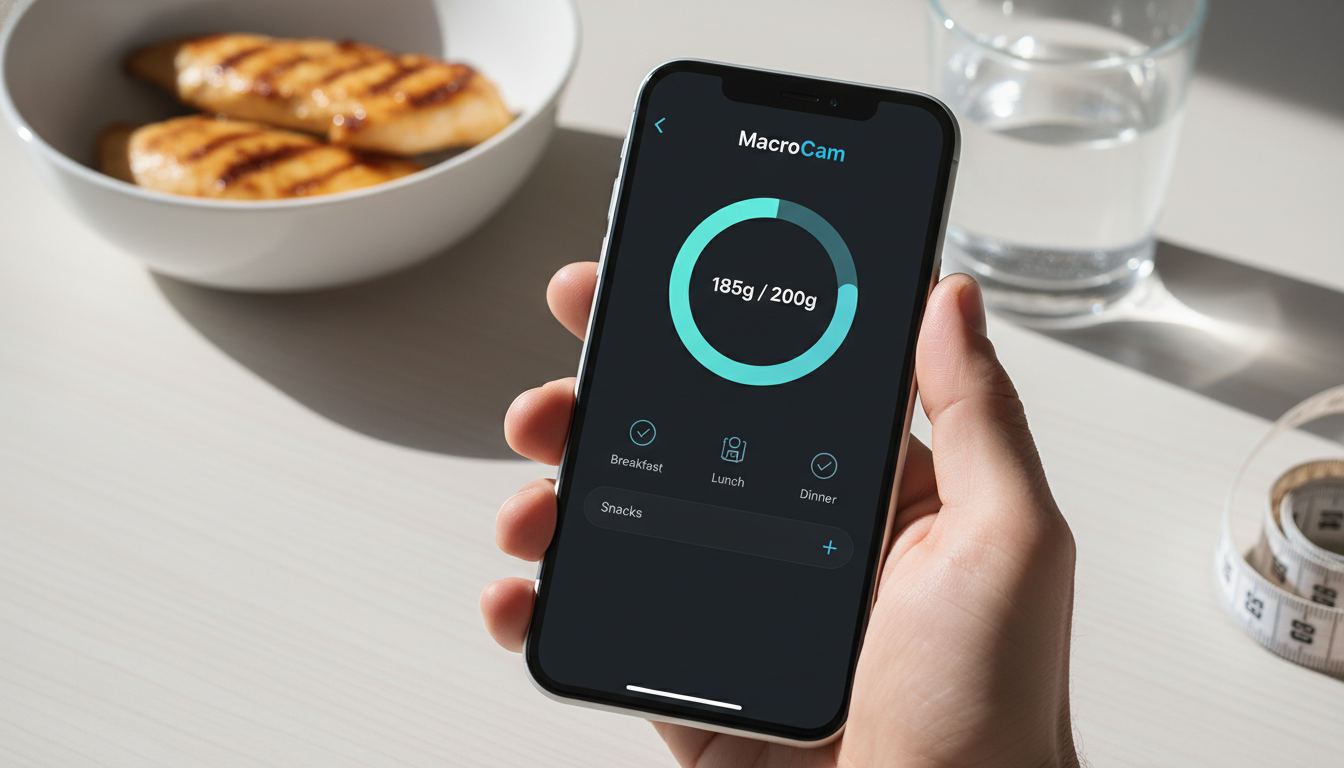
Protein Tracker App: What Actually Works?
A protein tracker app actually works when it simplifies logging, provides accurate data, and adapts to your real-life eating habits. The right app turns protein tracking from a chore into a seamless part of your day. We built Macrocam to solve the core frustrations of tracking protein and deliver tangible results.
Table of Contents
Why You Need a Protein Tracker App
The Core Features of an Effective App
Common Tracking Mistakes to Avoid
How to Choose Your Protein Tracker
Evidence and Numbers
Advanced Strategies for Better Results
Integrating Tracking into Your Daily Routine
FAQ
Why You Need a Protein Tracker App
Guessing your protein intake is a recipe for missed goals. You likely underestimate or overestimate your daily consumption. A dedicated protein tracker app provides the clarity you need. It removes the guesswork from your nutrition strategy. Consistent tracking is the fastest path to seeing real results. We know that data-driven decisions lead to better fitness outcomes.
Without an app, you face several challenges:
- Inconsistent Estimates: Eyeballing portions leads to large daily variances.
- Forgotten Meals: It’s easy to forget snacks or small protein sources.
- Lack of Accountability: No record means no way to review and adjust your plan.
- No Historical Data: You cannot identify patterns or measure long-term progress.
- Dietary Blind Spots: You miss the cumulative impact of fats and carbs on your goals.
Modern life is complex. Your nutrition tool should simplify it. We designed our protein tracker app to cut through the noise. It gives you a single source of truth for your diet. This clarity is empowering. You move from hoping to knowing. That confidence transforms your approach to food and fitness.
The Core Features of an Effective App
Not all tracker apps are created equal. An effective protein tracker must excel in several key areas. We designed Macrocam’s core features based on these essential pillars. The right features determine whether you stick with tracking or quit.
1. Effortless and Fast Logging Speed is critical for long-term consistency. The best apps minimize daily friction.
- Barcode scanning for packaged foods.
- A vast, accurate database of whole foods and branded items.
- Quick-add buttons for your most frequent protein sources.
- The ability to save and reuse frequent meals and recipes.
- Voice input for logging hands-free while cooking or eating.
2. Accurate and Comprehensive Data The app’s database is its foundation. Inaccurate entries make your tracking useless.
- Verified nutritional information from reputable sources.
- Clear serving size options (grams, ounces, cups, pieces).
- The ability to create and save custom food items for total control.
- Community-verified entries to catch and correct errors quickly.
- We continuously update our database to ensure reliability.
3. Personalized Goal Setting and Insights Static goals don’t work for everyone. Your app should adapt to your unique body and lifestyle.
- Customizable daily protein targets based on weight, body fat, and activity.
- Dynamic adjustments for training days versus rest days.
- Clear visual progress charts and daily summaries.
- Intelligent reminders that help you stay on track without being annoying.
- Our algorithm provides tailored recommendations based on your logging history.
4. Holistic Macro and Micro Tracking Protein doesn’t exist in a vacuum. You need to see the full nutritional picture.
- Simultaneous tracking of carbohydrates and fats.
- Fiber and sugar monitoring for overall health.
- Calorie tracking to manage energy balance for fat loss or muscle gain.
- Water intake logging to support hydration and metabolism.
- We provide a complete dashboard so you understand all your metrics.
Common Tracking Mistakes to Avoid
Using an app correctly is just as important as choosing it. Avoid these common pitfalls to ensure your effort pays off. These errors can silently sabotage your progress for months.
- Not Weighing Your Food. Using “1 chicken breast” is vague. A food scale provides precision. We recommend weighing key protein sources for at least the first two weeks to calibrate your eyes.
- Ignoring “Hidden” Protein. Don’t forget protein in grains, vegetables, and snacks. These small amounts add up significantly by the end of the day. A cup of cooked quinoa has 8 grams.
- Forgetting Cooking Oils and Add-ons. Cooking sprays, oil, butter, and sauces contain calories and fats. They can skew your overall macro picture if omitted. Log your tablespoon of olive oil.
- Being Inconsistent. Tracking perfectly one day and not at all the next gives you no usable data. Consistency, even if imperfect, is the ultimate goal. We encourage daily logging to build the habit.
- Trusting Restaurant Entries Blindly. User-submitted restaurant entries often underestimate calories and fat. Use them as an estimate, or choose a similar generic entry you can customize.
- Not Adjusting for Cooking Loss. Weigh your meat raw whenever possible. Cooking can cause significant water and weight loss, throwing off your protein calculation.
How to Choose Your Protein Tracker
The market has many options. Use this detailed comparison to evaluate what matters most for your success. Your chosen app should feel like a helpful coach, not a complicated spreadsheet.
| Feature | Why It Matters | What to Look For |
|---|---|---|
| Logging Speed | Determines long-term adherence. Friction causes abandonment. | Barcode scanner, frequent foods list, meal copy/paste, voice input. |
| Database Accuracy | Foundational for reliable data. Garbage in, garbage out. | User-verified entries, reputable sources, easy correction system. |
| Goal Customization | Ensures the target is right for your specific physiology. | Targets based on lean mass, activity level, and specific goals (cut/bulk). |
| Insights & Reporting | Helps you learn patterns and adjust your diet intelligently. | Daily/weekly summaries, macro distribution charts, progress over time. |
| User Experience (UX) | Reduces frustration and makes the process enjoyable. | Clean interface, intuitive navigation, fast performance, dark mode. |
| Data Portability | Protects your long-term data if you switch platforms. | Ability to export your logs via CSV or other standard formats. |
| Support & Community | Provides help when you get stuck or need motivation. | Responsive support team, active user community, helpful resources. |
We built Macrocam to excel in every category above. Our focus is a frictionless user experience that you’ll actually enjoy using daily. The right tool removes barriers between you and your goals.
Evidence and Numbers
Data proves the impact of precise protein tracking and adequate intake. These numbers underscore why a dedicated tool is non-negotiable for serious results. Our development philosophy is grounded in this science.
- 1.6 g/kg: Research indicates this is the optimal daily protein intake for those engaged in resistance training to maximize muscle growth. Source Aim for this range if building muscle is your primary goal.
- 25-30g: Consuming this amount of protein per meal optimally stimulates muscle protein synthesis (MPS). Source Spreading your intake evenly across 3-4 meals daily maximizes this effect.
- ~20%: Studies show people underreport their food intake by an average of 20% when not tracking meticulously. Source This error margin can completely derail your fitness progress.
Advanced Strategies for Better Results
Once you master basic logging, these advanced tactics will optimize your nutrition. They help you move from simple tracking to strategic diet management. We integrate these principles into our app’s guidance.
Implement Protein Pacing Don’t just hit a daily total. Distribute your protein evenly. Aim for a target amount per meal. This approach maximizes muscle protein synthesis throughout the day. It also helps control hunger and energy levels. Set meal-specific targets within your app if the feature is available.
Use Periodic Diet Breaks Continuous calorie or macro restriction can slow your metabolism. Schedule a week at maintenance calories every 8-12 weeks. This “diet break” can improve hormonal profiles and adherence. Use your tracker to carefully increase your intake during this period. We suggest adjusting your daily goals temporarily for this phase.
Track for Energy, Not Just Weight Monitor how your logged intake correlates with your workout performance and daily energy. If your strength is plummeting, you may need more carbs or overall calories. Your tracker provides the data to make this connection. Our weekly reports help you spot these performance trends.
Conduct a Food Audit Every month, export your data. Analyze your most frequent food choices. Look for nutritional gaps—are you low on fiber or certain vitamins? Use this audit to plan healthier grocery trips. This turns your log from a diary into a planning tool. We make data export simple for this exact purpose.
Sync with Other Health Metrics The most powerful insights come from correlation. Pair your nutrition data with sleep trackers, workout apps, and weight trends. Notice how higher carb days affect your sleep. See how protein intake influences recovery. We support integrations to bring this data together.
Integrating Tracking into Your Daily Routine
The best app fails if you don’t use it. Make tracking a sustainable, non-negotiable habit with these proven tactics. Consistency is the bridge between goals and accomplishment.
- Log As You Go. Log each meal immediately after eating. Don’t wait until the end of the day when you’ll forget details. This takes less than 60 seconds with the right app.
- Prepare Your Log. Enter planned meals in the morning. This creates a roadmap and helps you make proactive adjustments. It also prevents you from reaching dinner with no protein left in your budget.
- Use the Quick Tools. Rely heavily on the barcode scanner and saved meals. These features cut logging time by more than half. We’ve optimized these tools in Macrocam for one-tap access.
- Batch-Cook and Log. When meal prepping, weigh and log all ingredients in the recipe builder once. Then, you can log a portion with a single tap all week. This is the ultimate efficiency hack.
- Review Weekly. Set a weekly time to review your trends. Look for patterns in your intake and adjust your shopping or planning accordingly. Our app provides visual weekly summaries to make this review simple and insightful.
- Embrace Imperfection. Some days will be incomplete. Log what you can and move on. Perfectionism is the enemy of consistency. We designed the app to be forgiving for real life.
FAQ
How much protein do I actually need? A general guideline is 0.7-1 gram per pound of body weight. Active individuals and those building muscle should aim for the higher end. More precise formulas use lean body mass. Use our in-app calculator for a personalized target based on your specific stats and goals.
Is it necessary to track every single day? For best results, track consistently, especially when establishing habits or dialing in your diet. Once you have a strong sense of your routine, you may switch to periodic “check-in” tracking for maintenance. However, daily tracking provides the most actionable data.
What if a food isn’t in the database? You can create a custom food entry with the nutrition label information. This ensures perfect accuracy. We also encourage users to submit missing foods with a photo of the label. This helps improve our shared database for everyone.
Can I track other macros with a protein tracker app? Yes. While protein is the priority, monitoring carbohydrates and fats provides a complete picture. Our app tracks all three macronutrients plus fiber to support flexible dieting approaches like IIFYM. You get a complete nutritional snapshot.
How do I handle meals at restaurants? Search for the restaurant chain in the database. If unavailable, find a similar generic item (e.g., “grilled chicken breast”) and log an estimated portion. When in doubt, overestimate fats and oils used in cooking. The goal is a reasonable estimate, not perfection.
Will I have to track forever? Not necessarily. Many people use tracking to learn proper portions and food composition. After several months, you may develop a keen eye. You can then transition to mindful eating, using the app occasionally for check-ins or when your routine changes.
Is my data private? Absolutely. Your food diary is personal. We never sell your individual tracking data. Our privacy policy details how we protect your information. You own your logs. We provide the tool to manage them.
Stop guessing and start making progress. A protein tracker app built for real life delivers accurate tracking, actionable insights, and a seamless experience designed for your success. Macrocam combines scientific rigor with intuitive design. Start now by downloading Macrocam and logging your first meal in under a minute. Your data-driven transformation begins today.